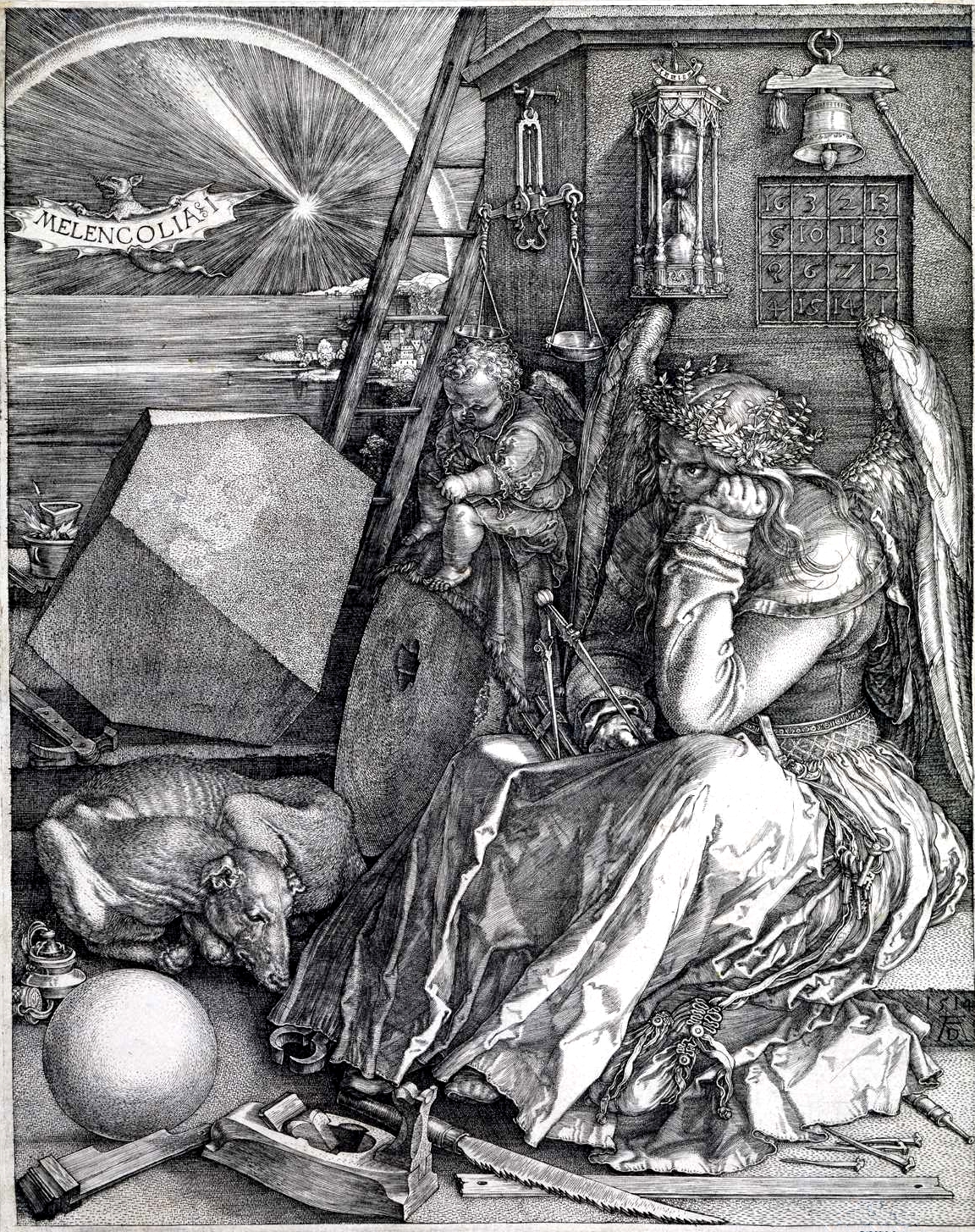
In the upper right corner of the most analyzed engraving in Western art, a grid of sixteen numbers hangs on the wall like a small framed charm. Every row sums to 34. Every column, 34. Both diagonals, the four quadrants, the four corners, the four center cells — 34. And in the middle of the bottom row, the square quietly signs the work: 15 · 14. The year Albrecht Dürer cut it into copper.
What the square is
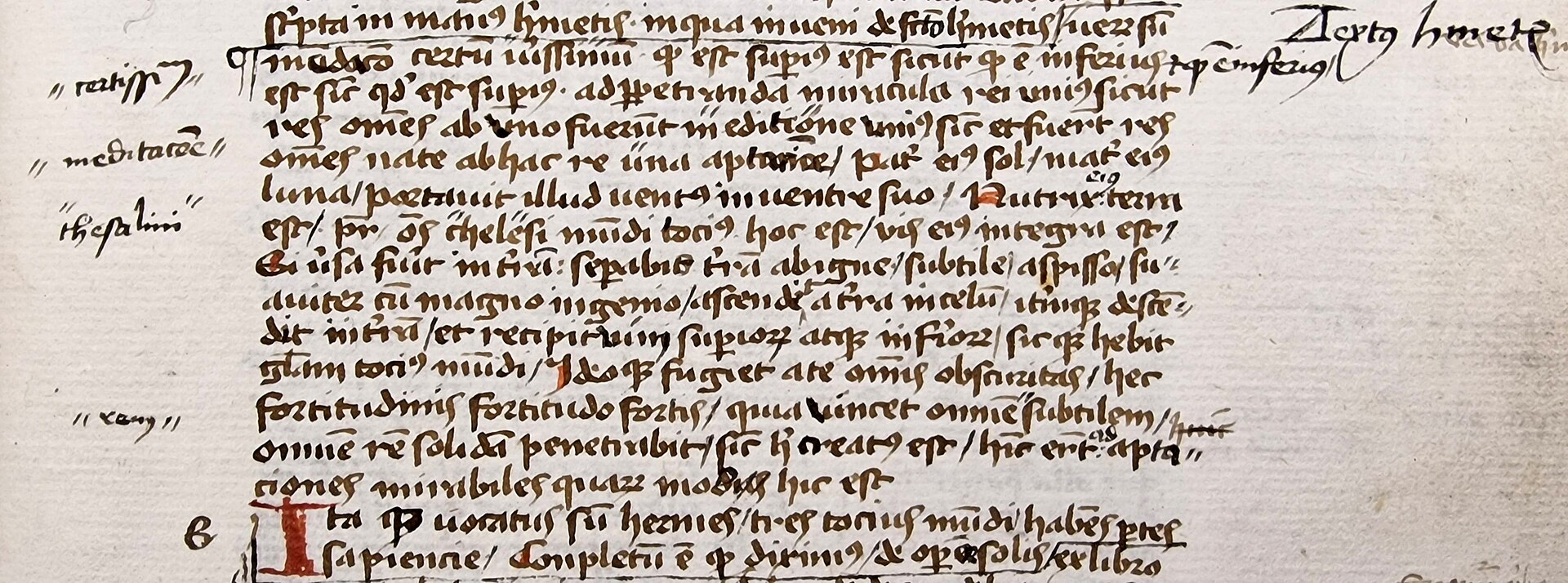
The doctrine of magic squares — kameas, in the language of the tradition — assigned one square to each of the seven planets: the 3×3 to Saturn, the 4×4 to Jupiter, and so on up to the Moon's 9×9. The assignments circulated in Cornelius Agrippa's De Occulta Philosophia, drafted by 1510 and moving through learned Europe in manuscript in exactly the years Dürer was working — Book II sets out the squares, their virtues, and the manner of engraving them on metal as talismans.
Dürer's square is the Jupiter kamea, its rows reordered to bring the date to the bottom edge but keeping every sum intact — a mathematician's flourish on a magician's device.
The construction itself is elegant enough to teach. For squares whose side divides by four, the classical method is almost insultingly simple: write the numbers one to sixteen in order, row by row, then reverse the two diagonals — exchange each diagonal cell for its complement, the number that makes seventeen. Every row, column, and diagonal balances at once, as if the order had been hiding inside the counting numbers all along. That, to the Renaissance mind, was precisely the point: the magic square was not an invention but a discovery — harmony latent in bare number, waiting to be turned up like a card. The same squares, built by the same classical methods, are working machinery in this observatory today: the seals drawn here trace each seeker's name through the kamea of their ruling planet, letter by letter, exactly as the tradition prescribes.
The engraving's company
Melencolia I did not come alone. It belongs to the trio the scholars call the Meisterstiche — the master engravings Dürer cut in 1513 and 1514: Knight, Death and the Devil, St. Jerome in His Study, and this. Three images, three lives — the active life of the will, the contemplative life of the spirit, and the third thing: the life of the mind at the edge of what it can do, winged and grounded at once. The age had a doctrine for that condition too. The pseudo-Aristotelian Problems had asked why all extraordinary men are melancholics, and the Renaissance answered that Saturn's affliction and Saturn's gift were the same endowment — the genius and the paralysis arrive on one temperament.
Why Jupiter, and why here
The engraving's whole subject is Saturn's affliction. Melencolia — the black humor of the scholar — belonged to Saturn in the medical doctrine of the age, and the winged figure sits in its classic posture: head on fist, tools abandoned, mind seized. Marsilio Ficino's Three Books on Life (1489), the era's manual for exactly this condition, prescribes the remedy in so many words: set Jupiter against Saturn — the expansive planet's influence, drawn through its images and numbers, tempers the contracting one. A Jupiter square hung in the sick room was not decoration. It was a prescription.
So the engraving carries its own cure, pinned to the wall above the patient. That reading — argued in full in Klibansky, Panofsky and Saxl's Saturn and Melancholy, the cornerstone study of the image — turns a piece of Renaissance mathematics into a window on how seriously the age took the machinery of correspondence: geometry, number, planet, and temperament in one working system.
Where the square still works
The same kameas never left the tradition — and they never left this house. The seals drawn in this observatory trace names through Agrippa's squares by the classical method, letter by letter, exactly as Book II directs. Agrippa's complete text stands in the Library's halls, and the squares themselves are working instruments here, not museum pieces. Dürer engraved his talisman in copper. The record engraves them still.
Entries like this one arrive at each new moon. The ledger keeps your place.